Buying a historic home in Prescott is part art, part strategy. You fall in love with the charm, then you realize there are rules, inspections, and renovation choices to navigate. If you want that porch swing and original woodwork without surprises, a little planning goes a long way. In this guide, you’ll learn how to identify Prescott’s classic home styles, understand local historic rules, set smart renovation priorities, and move forward with confidence. Let’s dive in.
Prescott’s historic appeal
Prescott grew up around the Courthouse Plaza and Whiskey Row, so you see clusters of late‑Victorian and early‑20th‑century houses near downtown and in nearby neighborhoods. Many are wood‑frame structures with distinctive porches and trim that give the city its character. The high‑desert climate brings seasonal cold and occasional snowfall, which affects maintenance schedules and materials choices.
Some properties are individually recognized as historic, while others sit inside historic districts. Those designations matter when you plan changes, so it pays to confirm status early in your search.
Historic designations 101
National vs local rules
A listing on the National Register of Historic Places is an honor and can open the door to certain incentives in specific cases. National Register status by itself typically does not restrict what a private homeowner can do unless federal funds or permits are involved. Local historic overlay districts, created by city ordinance, are where you usually see controls on exterior work, additions, or demolition.
In Prescott, confirm whether a property is within a local historic district or subject to design review by the City of Prescott’s planning and historic preservation staff or the Historic Preservation Commission. That review can influence materials, window choices, and the look of additions.
Contributing status
Within historic districts, a structure may be labeled “contributing” or “non‑contributing.” Contributing homes usually face closer scrutiny on exterior changes because they help define the district’s character. Ask for the property’s status and any prior approvals as soon as you get serious about an offer.
Before you make an offer
- Ask the seller or listing agent for any historic designation documents, local design guidelines, and previous approvals for exterior changes.
- Contact City of Prescott Planning or Historic Preservation staff to confirm local rules and review steps for your planned work.
- Check with the Arizona State Historic Preservation Office and the National Park Service if you want to explore incentive eligibility for specific types of projects.
Styles you’ll see
Victorian highlights in Prescott
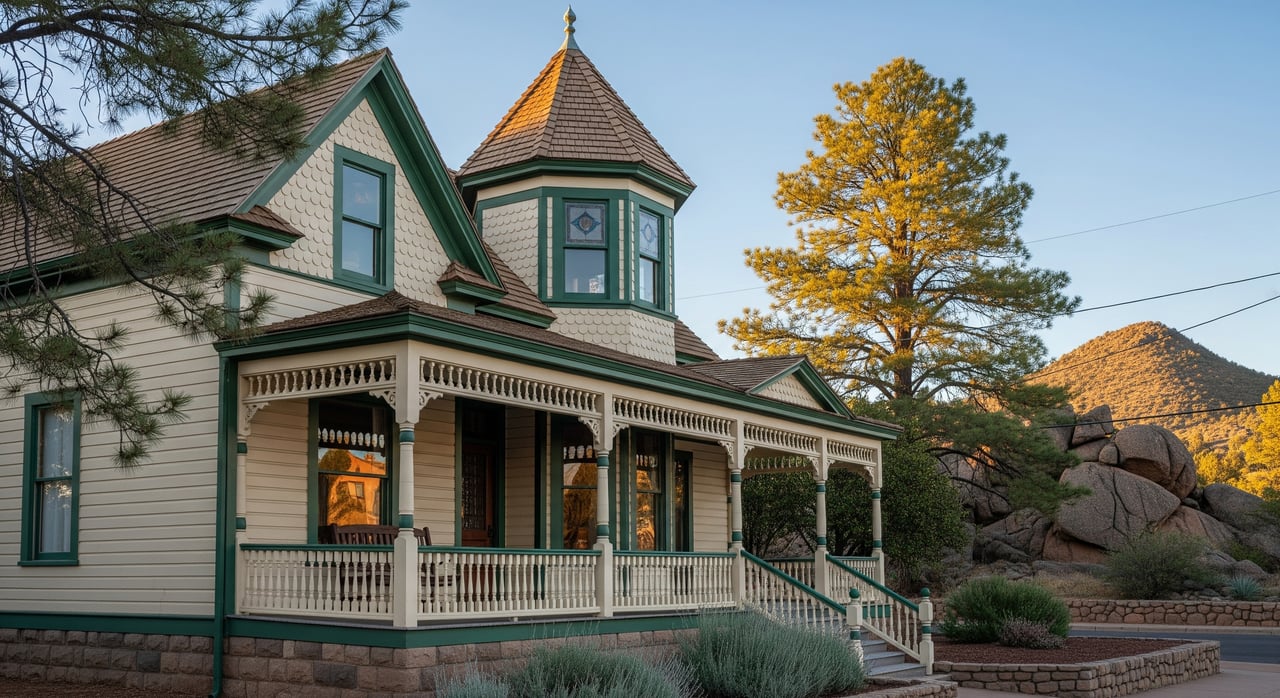
Victorian homes, including Queen Anne and Folk Victorian, often show asymmetrical façades, steep roofs, decorated gables, and wraparound porches. Higher‑style examples may have towers or turrets, while many feature turned wood trim, spindlework, and patterned shingle siding.
Local considerations include shallow masonry or stone foundations and extensive wood trim. Porch repair and paint restoration are common projects. Many older paint layers may contain lead, so plan for lead‑safe practices during any work that disturbs painted surfaces.
Craftsman character details
Craftsman homes, popular from the early 1900s into the 1930s, favor low‑pitched gables, wide overhangs with exposed rafter tails, and tapered columns on stone or brick piers. Inside, original built‑ins, wood trim, and hardwood floors often define the experience.
Pay close attention to roof overhangs and eaves in Prescott’s rain and snow seasons. Proper flashing and appropriately sized gutters help protect the structure and the finishes you want to keep.
Bungalow basics
Bungalows, often overlapping with the Craftsman era, are smaller in scale with one to one‑and‑a‑half stories and a welcoming front porch. Ornament is simpler than high‑style Victorians, and the layouts tend to be compact.
Expect modest room sizes and fewer bathrooms by modern standards. Many buyers plan sensitive kitchen and bath updates while keeping the exterior intact. Attic insulation and discreet comfort upgrades can make a big difference without changing the look.
Ownership and approvals
Design review and permits
If a Prescott home falls under local historic review, exterior work such as siding repair, window changes, porch reconstruction, additions, or demolition often requires approval. That review can add weeks or months to project timelines.
Regardless of designation, you still need building permits for structural, electrical, plumbing, and HVAC work. Historic status does not replace standard permitting.
Timelines and expectations
Fold review windows into your planning, and be ready to adjust details to meet guidelines. Interiors are usually less regulated than exteriors, but confirm any rules that apply to your specific property before you commit to a plan.
Financing, incentives, insurance
Older homes sometimes trigger lender questions about systems and deferred maintenance. Be ready to address electrical, plumbing, and roof condition in underwriting. Renovation‑friendly financing can help you roll improvements into the purchase.
Common options include FHA 203(k) and Fannie Mae HomeStyle renovation loans. Conventional renovation loans, home‑equity lines, or cash may also fit your plan. If you are considering incentives, note that the federal historic rehabilitation tax credit is generally for income‑producing properties, not owner‑occupied primary residences. State and local programs vary, so check with Arizona SHPO and the City of Prescott for current options.
Insurance for older homes can carry higher premiums or exclusions if roofs, wiring, or heating are outdated. Get quotes early. Homes built before 1978 may have lead‑based paint, and some may include asbestos in certain materials. Plan for lead‑safe work and abatement when needed.
Preservation principles
- Retain historic fabric when feasible. Original windows, trim, porches, and built‑ins add value and character.
- Favor reversible solutions. Consider storm windows or internal upgrades before full replacement when energy efficiency is the goal.
- Match what you see. When replacement is necessary on visible elevations, use materials and profiles that align with the original.
- Follow recognized standards. The Secretary of the Interior’s Standards provide a clear framework for significant changes and documentation.
Renovation priorities
High‑priority fixes
- Roof and flashing repair or replacement to prevent water intrusion.
- Foundation stabilization and moisture control around shallow stone or masonry foundations.
- Electrical upgrades if you find knob‑and‑tube or outdated wiring. Add circuits for safe modern use.
- Plumbing replacement for older galvanized supply or deteriorated drain lines.
- HVAC improvements and targeted insulation, especially in attics, for comfort and energy performance.
- Exterior envelope care including siding repair, prep and paint, gutters, downspouts, and site grading to move water away from the foundation.
- Pest remediation and prevention, especially for termites or wood‑boring insects.
- Hazardous materials management, including lead‑safe paint stabilization and asbestos abatement where required.
Optional updates
- Floor‑plan changes for open living can be complex and may trigger review in historic districts.
- Full window replacement is often not the first choice. Repair and weatherization usually perform well, and historically appropriate replacements may be required if replacement is unavoidable.
Due diligence checklist
- Confirm historic designation and whether the home is inside a district with design review.
- Request copies of local design guidelines and any past Certificates of Appropriateness or administrative approvals.
- Schedule a general home inspection with someone experienced in older construction.
- Order specialized inspections as needed: structural engineer, licensed electrician, licensed plumber.
- Get a pest and termite inspection.
- For pre‑1978 homes, order a lead paint risk assessment. If you suspect asbestos in insulation or flooring, request a survey.
- Speak with City of Prescott planning or historic preservation staff about permits and review timelines.
- Obtain preliminary contractor estimates for high‑priority repairs and planned upgrades.
- Price out insurance and ask lenders about any required repairs for loan approval.
- Review records of prior renovations and confirm permits and workmanship.
Budget and timeline planning
Older homes can reveal hidden issues like rot, concealed water damage, or non‑code wiring once work begins. Build a contingency into your budget. Many preservation contractors recommend a 10 to 25 percent cushion beyond estimates for older structures.
Expect longer timelines when you prioritize preservation. Skilled craftspeople and custom materials can take time to source. Balance authenticity with everyday needs so you invest where it matters most and avoid over‑scoping areas that are costly or highly regulated.
Plan your next step
If you’re drawn to Prescott’s Victorian porches, Craftsman woodwork, or the simplicity of a classic bungalow, you can move forward with clarity by pairing smart due diligence with a practical renovation plan. When you are ready to discuss your goals, financing strategy, and timelines, reach out to a trusted advisor who understands both historic character and value. Connect with Dennis Salazar to talk through your next move and map a plan that fits your budget, lifestyle, and long‑term goals.
FAQs
What rules apply to Prescott historic homes?
- Local historic overlay districts and the City of Prescott’s design review process usually govern exterior changes, while National Register status by itself typically does not restrict private owners.
How do I confirm a home’s historic status before buying?
- Ask for designation documents and prior approvals, then contact City of Prescott planning or historic preservation staff to verify district boundaries, review steps, and any guidelines that apply.
What inspections are essential for older Prescott houses?
- Schedule a general inspection plus targeted reviews for structure, electrical, plumbing, pests, and, for pre‑1978 homes, lead paint. Add an asbestos survey if materials suggest risk.
Can I use renovation loans for historic homes?
- Yes. FHA 203(k) and Fannie Mae HomeStyle options can bundle purchase and rehab costs. Lender requirements vary, so confirm scope, timelines, and required repairs early.
Are there tax credits for restoring an owner‑occupied historic home?
- The federal historic rehabilitation tax credit generally applies to income‑producing properties, not primary residences. Check Arizona SHPO and the City of Prescott for any state or local programs.