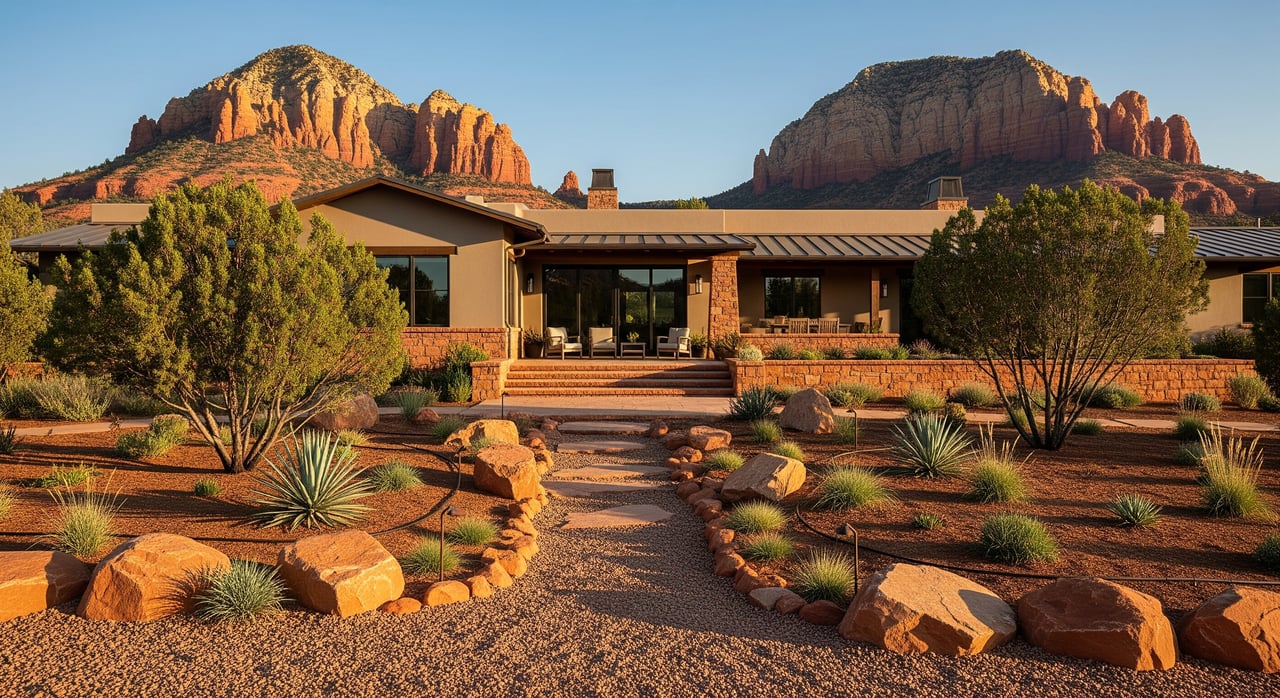
Wildfire in Sedona rarely starts at your doorstep, but embers can carry on the wind and find the weakest point of your home in seconds. If you live among pinyon-juniper, Gambel oak, manzanita, or grassy slopes, you know how quickly fire can move. The good news is that a few smart changes to your home and landscaping can make a real difference. In this guide, you’ll learn how to harden your home against embers, design defensible space by zone, choose firewise plants for Sedona, and keep it all maintained. Let’s dive in.
Why Sedona faces ember risk
Sedona sits at the meeting point of high-desert and pinyon-juniper oak chaparral. That mix creates continuous fuels, ladder fuels, and pockets of dry litter that can carry fire fast. Spring and fall are especially fire-prone, and strong canyon or downslope winds can push embers far ahead of flames.
Monsoon rains briefly raise moisture but also grow grasses and forbs that later cure into fine fuels. National research shows embers are the leading cause of home ignitions during wildfires. Your best defense is to block ember entry and remove combustible materials close to the home.
Harden your home first
Home hardening focuses on keeping embers out and away from anything that can ignite.
Roof and roof edges
- Use Class A roofing when possible.
- Clean leaves and needles from roof valleys and eaves before and during fire season.
- Box in or cover open eaves where feasible and seal gaps along roof edges and soffits.
Vents and openings
- Install ember-resistant vent screening. Corrosion-resistant metal mesh with small openings is commonly recommended. Confirm exact mesh size with local code.
- Seal gaps around conduit, piping, dryer vents, fascia, and soffits to block ember entry.
Siding and exterior
- When replacing, choose ignition-resistant or noncombustible siding like stucco, fiber cement, masonry, or metal.
- Repair and seal gaps, especially where siding meets roofs or decks.
Windows and doors
- Dual-pane tempered glass resists heat better than single-pane.
- Add fine-mesh screens to operable windows and ensure all exterior and garage doors are tight fitting.
Decks and attachments
- Prefer ignition-resistant or noncombustible decking. Keep a noncombustible strip between the deck and any vegetation.
- Enclose the underside of elevated decks with noncombustible materials or fine-mesh screening. Do not store combustibles underneath.
Gutters and roofline
- Use metal gutters and consider ember-rated gutter guards.
- Keep gutters and the roofline free of needles and debris.
Chimneys and spark arrestors
- Fit spark arrestors on chimneys and maintain safe clearances from vegetation.
Quick, low cost wins
- Move firewood, lumber, and propane tanks well away from structures.
- Clean roofs and gutters regularly during fire season.
- Replace or screen attic and foundation vents and seal gaps under eaves.
For more on the Home Ignition Zone and ember behavior, review the USDA Forest Service overview of the concept in the Home Ignition Zone resources and NFPA’s Firewise USA guidance.
Defensible space by zone
Think of your property in zones, each with a different goal and treatment.
Immediate zone 0–5 feet
- Make this a noncombustible zone. Use stone, gravel, pavers, or irrigated, low-growing succulents.
- Avoid wood mulch next to walls, windows, and under eaves or decks.
- Keep firewood, brush piles, and propane tanks out of this zone.
Intermediate zone 5–30 feet
- Keep it lean, clean, and green. Remove dead material and maintain healthy, irrigated plants.
- Space plant islands with noncombustible pathways between them.
- Remove ladder fuels by keeping shrubs away from tree trunks and pruning lower tree limbs.
- If you use organic mulch, keep it thin and well irrigated. Prefer decorative rock around the first few feet of the home.
Extended zone 30–100+ feet
- Thin dense stands of pinyon-juniper and chaparral to reduce fuel continuity.
- Remove dead trees and invasive grasses.
- Increase defensible distance on slopes. Steeper slopes increase flame length and heat, so treat farther uphill. Confirm exact distances with local fire authorities.
For practical zone-by-zone tips, Cal Fire’s public materials offer helpful parallels to Arizona conditions. See the program’s general resources at Ready for Wildfire.
Firewise plants for Sedona
Sedona’s landscape benefits from plants with low volatile oils, higher moisture, and low litter. Focus on:
- Low-growing succulents and irrigated perennials nearest the home.
- Deciduous trees with lower resin content, placed with proper spacing.
- Plant groupings in islands, separated by rock, gravel, or hardscape.
Avoid dense, unmanaged thickets of highly resinous shrubs near structures. Large juniper clusters, unmanaged manzanita, and cured grasses can raise risk if planted or maintained too close to the home.
Before choosing specific species, check Arizona-specific lists and maintenance guidance from the University of Arizona Cooperative Extension and the Arizona Department of Forestry and Fire Management.
Pruning, spacing, ladder fuels
Your goal is to keep ground flames from climbing into tree canopies and to break up continuous fuels.
- Prune lower limbs to remove ladder fuels. Many guides suggest removing branches within 6 to 10 feet of the ground or at least the lower one-third of the tree height. Confirm exact standards with local authorities.
- Maintain horizontal spacing between tree crowns so one torching tree does not ignite the next.
- Remove dead wood, stumps, and accumulated needles. Keep grass trimmed short during fire season.
Maintenance calendar and checklist
Defensible space and home hardening work only if you keep up with the maintenance.
Seasonal schedule:
- Spring and autumn
- Mow and remove dead grasses and weeds. Many guides recommend keeping grass under a few inches. Confirm local guidance.
- Service irrigation to keep plantings healthy.
- Annually or twice yearly
- Clean roofs, gutters, and downspouts of needles and debris before and during fire season.
- Inspect vents, eaves, and rooflines. Repair gaps and replace damaged screens.
- Prune trees and shrubs to remove dead wood and ladder fuels. Remove dead trees when needed.
- Replenish noncombustible groundcover in the 0–5 foot zone.
- As needed
- Clear fallen branches after wind or storms.
- Reassess vegetation growth after monsoon. Grasses that surge in summer can become fine fuels later.
Quick priority checklist:
- Move combustibles and wood piles away from the house.
- Clean roofs and gutters now.
- Create a noncombustible 0–5 foot perimeter.
- Install ember-resistant vent screens and seal gaps.
- Prune and thin to remove ladder fuels and separate tree crowns.
- Keep grasses short and remove invasive weeds.
- Plan higher-cost upgrades like Class A roofing or noncombustible decking as long-term investments.
Local resources and next steps
Local programs can help you tailor these steps to Sedona’s terrain, vegetation, and codes.
- Contact your Sedona area fire district for assessments, chipping details, and defensible space guidance. Start at the Sedona Fire District.
- Review countywide priorities and any cost-share opportunities on Coconino County’s website, then confirm permit needs if you are near national forest boundaries.
- Explore Arizona-specific plant lists and landscaping guidance with the University of Arizona Cooperative Extension and the Arizona Department of Forestry and Fire Management.
- For a deeper dive on home hardening and the Home Ignition Zone, consult NFPA’s Firewise USA resources and the USDA Forest Service Home Ignition Zone overview.
A wildfire-ready property protects your safety and your investment. By hardening your home, designing smart zones, and maintaining them through the seasons, you reduce risk where it matters most.
If you are planning a move or preparing to sell after completing your firewise upgrades, connect for market guidance and pricing strategy that highlights your property’s resilience. Ready to understand today’s value and next best steps? Get your valuation through Unknown Company.
FAQs
What is defensible space for a Sedona home?
- Defensible space is the managed area around your home that reduces fire intensity and ember exposure, typically broken into 0–5 feet, 5–30 feet, and 30–100+ feet zones tailored to local slope, fuels, and code.
Which mulch is safest next to my house in Sedona?
- Use rock, gravel, or other noncombustible groundcover in the first 0–5 feet; if you use organic mulch beyond that, keep it thin, irrigated, and away from siding and vents.
How do I keep embers out of attic and crawlspace vents?
- Install ember-resistant, corrosion-resistant metal mesh with small openings per local code, and seal gaps around all penetrations like pipes, conduits, and dryer vents.
Should I remove juniper or manzanita near my home?
- Avoid dense, unmanaged thickets close to structures; thin and space plants, prune to remove ladder fuels, and keep any remaining shrubs well maintained and away from tree trunks.
When should I schedule maintenance around monsoon season?
- Service irrigation and manage growth in spring, then recheck after monsoon because new grasses and forbs can cure into fine fuels that need mowing and removal before fall fire weather.